Gujarat Municipal Corporation Election 2026 Date: Complete Schedule, 4.19 Crore Voters, and 10,005 Seats at Stake
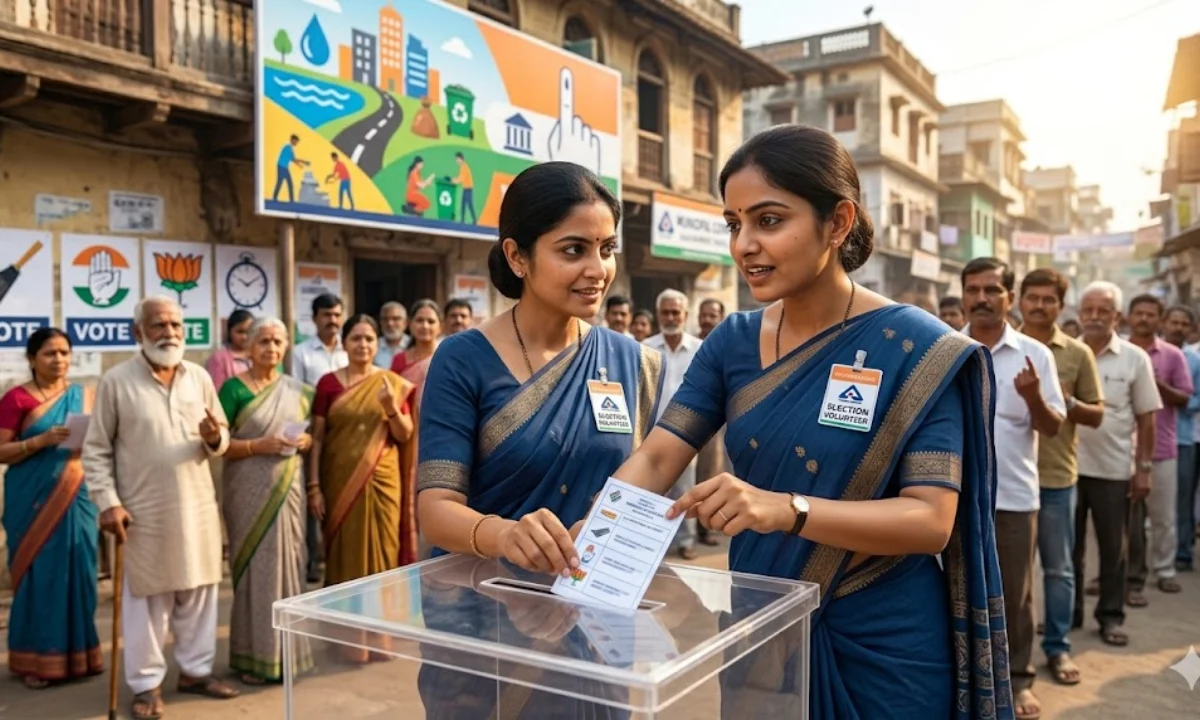
Gujarat Municipal Corporation Election Date 2026
The wait is finally over for millions of Gujarat residents. The State Election Commission has officially announced the Gujarat Municipal Corporation Election 2026 date and the complete schedule for local body elections across the state. This announcement came on April 1, 2026, setting the stage for one of the largest grassroots democratic exercises in Gujarat’s recent history.
If you are searching for the exact voting date, nomination timeline, or want to understand what makes this election different from previous cycles, this guide provides every essential detail. With over 4.19 crore eligible voters and 10,005 seats up for grabs across multiple tiers of local governance, this election represents a significant moment for urban and rural development in Gujarat.
Gujarat Municipal Corporation Election 2026 Date and Complete Schedule
The State Election Commissioner Dr. S. Muraleekrishna announced the official schedule on April 1, 2026. The commission has set a tight timeline that gives candidates and parties limited preparation time.
Complete Election Timeline
| Event | Date | Description |
|---|---|---|
| Model Code of Conduct | April 1, 2026 | Immediate implementation across all districts |
| Nomination Filing Starts | April 6, 2026 | Candidates can begin submitting nomination papers |
| Last Date for Nomination | April 11, 2026 | Final deadline for filing candidature |
| Scrutiny of Nominations | April 13, 2026 | Election officials verify all submitted nominations |
| Last Date for Withdrawal | April 15, 2026 | Candidates can withdraw their nominations |
| Voting Date | April 26, 2026 | Polling from 7:00 AM to 6:00 PM across all booths |
| Repolling (if required) | April 27, 2026 | Buffer day for any necessary repolling |
| Counting and Results | April 28, 2026 | Vote counting and result declaration |
The voting will take place on Sunday, April 26, 2026, from 7:00 AM to 6:00 PM. This timing allows maximum voter participation across urban and rural areas. The results will be declared on April 28, 2026, just two days after polling concludes .
Scale and Scope: Understanding the Massive Numbers
This election is not limited to municipal corporations alone. It covers the entire spectrum of local self-governance institutions in Gujarat.
Breakdown of Seats and Bodies
The elections will cover 378 local bodies across four categories of governance structures. Here is the detailed breakdown:
Urban Local Bodies:
- 15 Municipal Corporations with 1,044 seats
- 84 Municipalities with 2,624 seats
- 13 Municipal bypoll seats in 11 municipalities
Rural Local Bodies:
- 34 District Panchayats with 1,090 seats
- 260 Taluka Panchayats with 5,234 seats
Total Seats: 10,005 seats will be contested when including the 13 by-election seats .
Ward Distribution Across Election Categories
| Category | Number of Wards | Seats Contested |
|---|---|---|
| Municipal Corporations | 261 wards | 1,044 seats |
| Municipalities | 668 wards | 2,624 seats |
| District Panchayats | 1,190 wards | 1,090 seats |
| Taluka Panchayats | 5,234 wards | 5,234 seats |
| Municipal Bypolls | 13 seats | 13 seats |
The elections will be held across 7,253 wards in total, making this one of the most extensive local body election exercises in Gujarat’s history .
Voter Statistics: Who Will Cast Their Vote
Understanding the voter base helps candidates and analysts gauge the election’s significance. The numbers reveal a massive democratic participation expected across the state.
Complete Voter Breakdown
Total Eligible Voters: 4,18,91,747 voters out of Gujarat’s 4.4 crore eligible population will participate in these elections .
Gender Distribution:
- Male Voters: 2,16,17,803
- Female Voters: 2,02,72,979
- Others: 965
Geographic Distribution of Voters:
- Municipal Corporation Areas: 1,10,39,469 voters
- Municipality Areas: 33,66,333 voters
- District and Taluka Panchayat Areas: 2,74,85,945 voters
This distribution shows that while urban areas have significant voter concentration, rural panchayat areas hold the majority of the voting population.
Polling Infrastructure
The State Election Commission has made extensive arrangements to ensure smooth polling:
- Total Polling Stations: 49,591 stations will be set up across Gujarat
- Polling Staff Deployment: 4,49,097 staff members will manage the election process
- Sensitive Booths: Approximately 11,000 polling booths have been declared sensitive, requiring additional security measures
List of 15 Municipal Corporations Going to Polls
This election marks a significant expansion in Gujarat’s urban local governance structure. For the first time, elections will be held in nine newly constituted municipal corporations alongside the six existing ones.
Existing Municipal Corporations (6)
- Ahmedabad Municipal Corporation
- Surat Municipal Corporation
- Vadodara Municipal Corporation
- Rajkot Municipal Corporation
- Jamnagar Municipal Corporation
- Bhavnagar Municipal Corporation
The BJP currently holds power in all six existing municipal corporations following their clean sweep in the previous election cycle .
Newly Constituted Municipal Corporations (9)
- Karamsad-Anand Municipal Corporation
- Gandhidham Municipal Corporation
- Nadiad Municipal Corporation
- Navsari Municipal Corporation
- Porbandar Municipal Corporation
- Mehsana Municipal Corporation
- Morbi Municipal Corporation
- Vapi Municipal Corporation
- Surendranagar Municipal Corporation
These nine new corporations represent the expansion of urban governance in Gujarat. Elections in these cities will be held for the first time after their upgrade from municipality status. The delimitation exercises in these new corporations have created new wards and changed the political landscape for local candidates .
New Features in 2026 Elections
The 2026 local body elections introduce several significant changes that differentiate them from previous cycles. These updates reflect evolving governance needs and technological advancements.
Multi-EVM System Implementation
For the first time in local body elections of this magnitude, the State Election Commission is deploying a differentiated Electronic Voting Machine approach:
- Municipal Corporations: Multi-EVM system will be used to handle the large number of candidates in urban polls
- Panchayat Elections: Single EVM device will be deployed for district and taluka polls
This multi-EVM system aims to reduce waiting times and improve the voting experience in densely populated urban areas where candidate numbers are typically higher .
27 Percent OBC Reservation
This election marks the first implementation of the 27 percent reservation for Other Backward Classes (OBCs) in Gujarat local bodies. The state government announced this reservation based on the Jhaveri Commission report.
Key Reservation Details:
- 27 percent of seats in panchayats, municipalities, and municipal corporations are reserved for OBC candidates
- In PESA-notified tribal areas, OBC reservation remains at 10 percent to protect tribal interests
- Existing quotas for Scheduled Castes and Scheduled Tribes remain unchanged
- The reservation stays within the 50 percent ceiling mandated by the Supreme Court
Additionally, seven district panchayat president posts have been reserved for OBC candidates for the first time in Gujarat’s local political history .
Seat Rotation and Women’s Reservation Changes
The election also implements new seat rotation patterns and updated women’s reservation rules. These changes are expected to significantly alter candidate profiles and local leadership patterns, creating new opportunities for underrepresented groups while requiring established politicians to adapt to new ward configurations .
Political Context & Competition
The 2026 local body elections are set against a backdrop of intense political activity and strategic positioning by major parties.
Multi-Cornered Contest Expected
The elections will witness competition among multiple political forces:
- BJP: The ruling party at the state level, currently controlling all six existing municipal corporations
- Congress: The main opposition party working to rebuild its grassroots presence
- Aam Aadmi Party (AAP): Expanding its footprint in Gujarat local politics
- Smaller Regional Parties: Various local and caste-based parties
- Independent Candidates: Expected to play significant roles in local contests
The addition of nine new municipal corporations creates fresh battlegrounds where no incumbent advantage exists, potentially offering opposition parties better chances to establish presence .
Strategic Timing and Preparation Challenges
The announcement came on April 1, 2026, with nominations starting just five days later on April 6. This compressed timeline gives candidates and parties minimal preparation time.
Political analysts note that this short schedule benefits well-organized parties with strong local networks and established ground-level machinery. Parties with robust organizational structures can mobilize resources quickly, while newer or less organized political forces may struggle to identify candidates and campaign effectively in the limited window .
What This Election Means for Gujarat Residents
Local body elections directly impact daily life quality and urban development. Understanding the stakes helps voters make informed decisions.
Governance Areas Under Local Bodies
The elected representatives will control decision-making in critical areas:
- Water Supply and Management: Distribution networks, quality monitoring, and new connections
- Road Infrastructure: Local road maintenance, street lighting, and drainage systems
- Waste Management: Garbage collection, disposal systems, and recycling initiatives
- Urban Planning: Building permissions, zoning regulations, and land use decisions
- Public Health: Primary health centers, sanitation facilities, and disease prevention
- Education: Primary school management and local education infrastructure
Development Implications
The election results will shape development trajectories for the next five years. New municipal corporations face the challenge of establishing governance structures from scratch while meeting immediate infrastructure needs. Existing corporations must address accumulated urban challenges while integrating new wards from delimitation exercises.
How to Participate: Voter Guide
For the 4.19 crore eligible voters, participation requires basic preparation.
Before Election Day
- Verify Voter Registration: Check your name in the voter list through the official SEC Gujarat website
- Locate Your Polling Station: Confirm your designated booth using the voter slip or online portal
- Carry Required Documents: Bring your voter ID card or any approved alternative identification
- Check Timing: Remember polling runs from 7:00 AM to 6:00 PM on April 26, 2026
Voting Day Guidelines
- Arrive early to avoid long queues, especially at sensitive booths
- Follow COVID-appropriate behavior if any guidelines are in place
- Verify your identity with polling officials
- Check the EVM display before pressing the button to ensure your choice registers correctly
- Collect the voter verified paper audit trail if available at your station
Result Declaration & Counting Process
The vote counting on April 28, 2026, will follow established procedures with enhanced transparency measures.
Counting Day Protocol
- Counting begins simultaneously across all centers
- Results are compiled ward-wise and then aggregated for each local body
- The multi-EVM system results are tabulated separately for municipal corporations
- Final results are announced by evening and published on the official SEC Gujarat portal
The entire election process, from notification to results, completes within 27 days, making this one of the fastest local body election cycles in Gujarat’s recent history.
Related Posts :


Share This Post