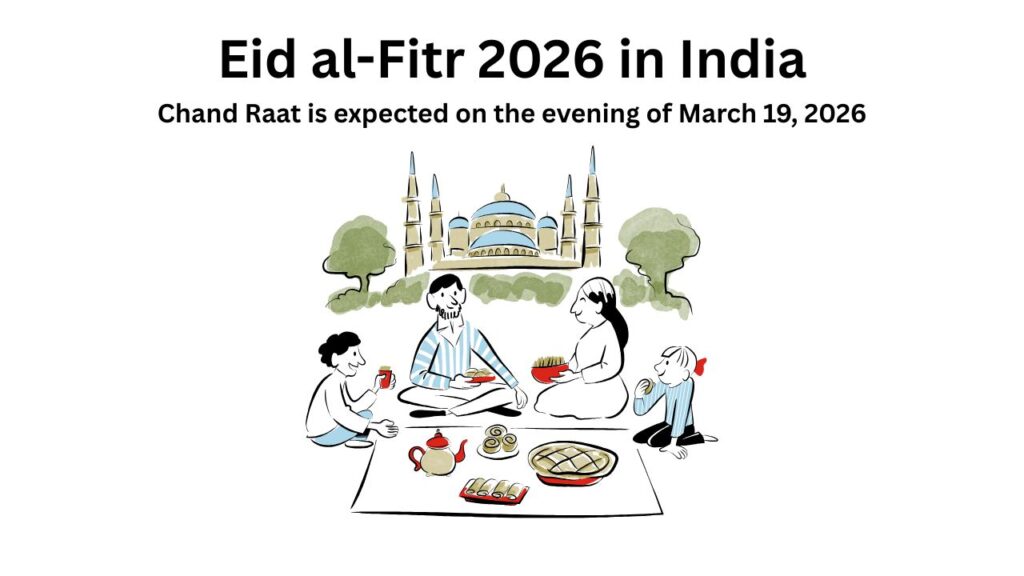
The festival of Eid al-Fitr, also known as Sweet Eid, marks the end of the holy month of Ramadan.
In India, Eid al-Fitr 2026 is expected to begin on the evening of Thursday, March 19 (Chand Raat) and will likely be celebrated on Friday, March 20 or Saturday, March 21, depending on the sighting of the crescent moon.
The exact date is confirmed only after the moon is sighted by religious authorities and local Hilal committees.
Eid al-Fitr 2026: Moon Sighting and Key Dates
The celebration of Eid depends on the sighting of the Shawwal moon.
Chand Raat (Moon Sighting)
Chand Raat is expected on the evening of March 19, 2026, when families gather for shopping, celebrations, and preparations for Eid.
Expected Eid Date
- If the moon is sighted on March 19, Eid will be celebrated on Friday, March 20
- If the moon is not visible, Eid will fall on Saturday, March 21
Official Holiday
Many government calendars currently list March 21, 2026 as the gazetted holiday, though the final confirmation depends on moon sighting.
Core Traditions and Rituals of Eid al-Fitr
Eid al-Fitr is a day of prayer, charity, family gatherings, and festive meals.
Eid Prayer (Salat al-Eid)
The day begins with congregational prayers held shortly after sunrise at large mosques or open prayer grounds known as Eidgahs.
Zakat-ul-Fitr
Before the Eid prayer, Muslims give Zakat-ul-Fitr, a mandatory charity to the poor so that everyone can participate in the celebrations.
Eidi Tradition
Children often receive gifts or money called Eidi from elders, making it one of the most exciting moments for younger family members.
Festive Food
Eid is also called Sweet Eid because of traditional desserts like Sheer Khurma and Seviyan, along with dishes such as biryani that are shared with family and guests.
Best Places to Experience Eid in India
Several Indian cities are known for their grand Eid celebrations, special prayers, and festive food culture.
- Old Delhi (Jama Masjid, Chandni Chowk): Huge prayer gatherings and famous food including Nihari and Shahi Tukda
- Hyderabad (Charminar, Mecca Masjid): Famous Hyderabadi Haleem and shopping at Laad Bazaar
- Lucknow (Aishbagh Eidgah, Bada Imambara): Traditional Awadhi Tehzeeb and Galouti Kebabs
- Srinagar (Hazratbal Shrine, Jama Masjid): Eid prayers near Dal Lake with Kashmiri Wazwan dishes
- Mumbai (Minara Masjid, Mohammed Ali Road): Famous late-night street food including Seekh Kebabs and Malpua
Festive Attire and Social Customs
Eid celebrations also highlight traditional clothing and community gatherings.
New Clothes
People usually wear new or their best traditional outfits. Men often wear kurta-pyjamas or sherwanis, while women wear colorful shararas or salwar-kameez.
Henna (Mehendi)
Women and girls decorate their hands with intricate henna designs on Chand Raat.
Social Gatherings
Families visit relatives and friends, exchange greetings of Eid Mubarak, and share meals together to strengthen community bonds.
Eid Prayer Timings in Surat (Tentative)
In Surat, Eid prayers usually take place shortly after sunrise.
For March 20–21, 2026, sunrise in Surat is expected around 6:48 AM.
Major Eidgahs
Large prayer grounds such as Rander and Chowk Bazaar Eidgah generally conduct Eid prayers between 7:15 AM and 8:00 AM.
Local Mosques
Prayer timings at neighborhood mosques may vary:
- Some start around 7:00 AM
- Others begin around 8:30 AM
Final prayer timings are usually announced 2–3 days before Eid by the local Hilal committee.
Top Eid Street Food Destinations
Eid celebrations are incomplete without delicious street food.
Old Delhi (Near Jama Masjid)
Popular food spots include:
- Karim’s – Famous for Mutton Stew and Mutton Barra
- Aslam Chicken – Known for their butter-loaded roasted chicken
- Qureshi Kebab Corner – Famous for juicy Seekh Kebabs
- Cool Point – A perfect place for Shahi Tukda with ice cream
Hyderabad (Near Charminar)
Hyderabad is famous for its Eid food culture.
- Pista House / Shah Ghouse – Known for Hyderabadi Haleem during Ramadan and Eid
- Nimrah Café – Famous for Irani Chai and Osmania biscuits
- Shadab Hotel – Popular for Nalli Biryani and Zaffrani Paaya
- Matwale Doodh Ghar – A great place for Falooda and Lassi
Surat (Zampa Bazaar and Rander)
Surat also offers unique Eid food experiences.
- Rander Khao Gali – Known for Khow Suey and Randeri Aloo Puri
- Zampa Bazaar – Famous for Seekh Paratha and Jalebi-Papdi
- Dada’s Khaja – A popular sweet pastry traditionally enjoyed during Eid
Significance of Eid al-Fitr
Eid al-Fitr celebrates:
- The completion of Ramadan fasting
- Gratitude, charity, and generosity
- Family gatherings and community harmony
It is a festival that brings people together through prayers, food, and shared joy.
Frequently Asked Questions
When is Eid al-Fitr expected in 2026?
Eid al-Fitr 2026 is expected to begin on the evening of March 19 (Chand Raat) and will likely be celebrated on March 20 or March 21, depending on moon sighting.
What is Chand Raat?
Chand Raat is the evening when the crescent moon is sighted, marking the end of Ramadan and the beginning of Eid celebrations.
What are the key rituals of Eid?
Key rituals include the Eid prayer, giving Zakat-ul-Fitr charity, Eidi gifts for children, and sharing festive meals.
What time are Eid prayers in Surat?
Prayers are usually held between 7:15 AM and 8:00 AM at major Eidgahs, with neighborhood mosques offering varied timings between 7:00 AM and 8:30 AM.
Where are the best places to experience Eid in India?
Popular cities include Old Delhi, Hyderabad, Lucknow, Srinagar, and Mumbai, each with unique prayer gatherings and food traditions.
What are the must-try Eid foods in Delhi?
Famous dishes include Mutton Stew, Mutton Barra, butter-loaded roasted chicken, Seekh Kebabs, and Shahi Tukda.
What is Hyderabad famous for during Eid?
Hyderabad is renowned for Hyderabadi Haleem, Nalli Biryani, Zaffrani Paaya, and Irani Chai with Osmania biscuits.
Where can I enjoy Eid food in Surat?
Rander Khao Gali and Zampa Bazaar are popular spots for Khow Suey, Randeri Aloo Puri, Seekh Paratha, Jalebi-Papdi, and Dada’s Khaja.
What is the significance of Eid al-Fitr?
Eid al-Fitr celebrates the completion of Ramadan fasting and emphasizes gratitude, charity, family gatherings, and community harmony.