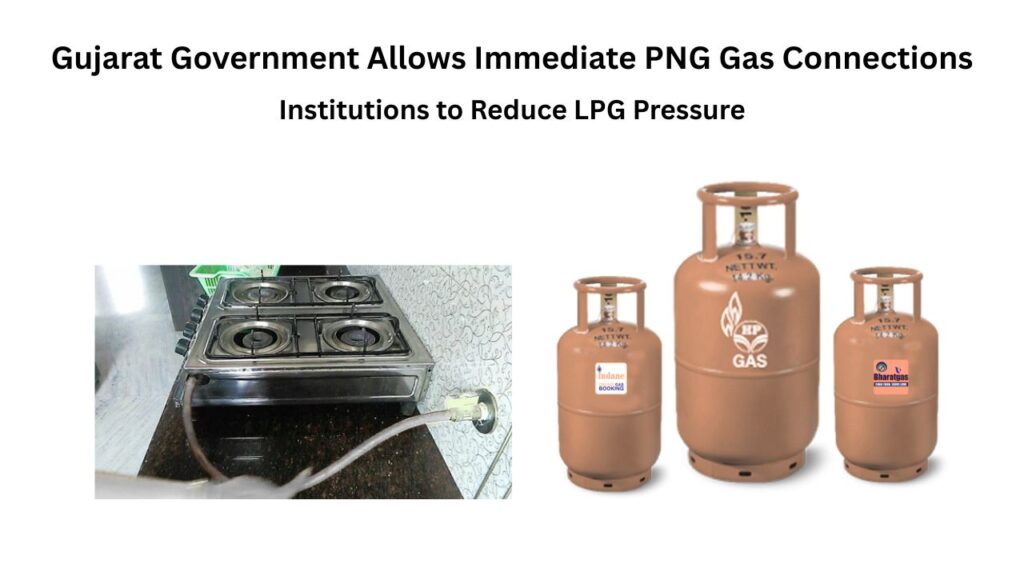
The Gujarat government has introduced a new policy to provide immediate Piped Natural Gas (PNG) connections to commercial and institutional users across the state. The decision was approved by Bhupendra Patel during a high-level review meeting held on March 13, 2026.
The move aims to reduce the growing pressure on LPG cylinder supplies and ensure a stable fuel supply for institutions such as restaurants, hotels, schools, and social organizations. Officials said the policy will help shift large fuel consumers to PNG pipelines, allowing LPG cylinders to be prioritized for domestic households.
Policy Scope and Eligibility
Under the new policy, institutions located in areas with an existing City Gas Distribution (CGD) pipeline network can apply for PNG connections with immediate effect.
Institutions Eligible for Immediate PNG Connections
The policy mainly targets high fuel consumption sectors such as:
- Commercial establishments – Restaurants, hotels, and food businesses
- Educational institutions – Schools, colleges, and student hostels
- Social and religious organisations – Public service institutions and community facilities
These establishments often require large quantities of cooking fuel, which puts additional pressure on LPG supply systems.
Key Objective Behind the Policy
Addressing LPG Shortage
The policy comes after a surge in LPG demand triggered by disruptions in global energy routes due to geopolitical tensions in West Asia. In recent months, panic booking and higher demand for LPG cylinders have increased pressure on the supply chain.
Better Use of Existing Gas Infrastructure
By moving high-consumption institutions to PNG pipelines, the government plans to make better use of the existing gas infrastructure across Gujarat. This will help ensure LPG cylinders remain available for households that do not yet have access to gas pipelines.
Stable Energy Supply in Gujarat
Officials confirmed that while LPG buffer stocks are being monitored regularly, the state’s PNG supply remains stable and sufficient.
Supporting Measures Introduced by the Government
To manage the current fuel demand situation, the state has introduced additional measures.
Kerosene Allocation for Rural Areas
The government has allocated 1,452 kilolitres of kerosene for rural areas and school hostels where gas pipeline access is not available. This measure ensures that cooking and lighting needs continue to be met in remote locations.
LPG Refill Limits
To control inventory pressure, refill intervals have also been introduced:
- Urban LPG users: One refill every 25 days
- Rural LPG users: One refill every 45 days
These limits are meant to stabilize supply during periods of high demand.
Operational Impact and Restrictions
LPG Prioritised for Domestic Use
By shifting commercial and institutional consumers to PNG pipelines, the government plans to reserve LPG cylinders mainly for domestic kitchens.
Temporary Gas Supply Adjustments
To maintain balance in the system, the state has implemented temporary supply reductions in some sectors:
- General industries: 50% reduction in gas supply
- Fertiliser and milk processing units: 40% reduction
These steps are designed to ensure essential sectors continue to receive adequate energy resources.
Advantages of Switching to PNG for Institutions
The government has also highlighted several benefits of using PNG instead of LPG cylinders.
Easier Inventory Management
PNG eliminates the need for manual cylinder booking, storage, and tracking. Institutions can receive a continuous supply through pipeline networks.
Financial Flexibility
Businesses pay for gas after consumption, usually on a monthly billing cycle. This helps institutions manage working capital better compared to upfront LPG cylinder payments.
Improved Safety
PNG is lighter than air and disperses quickly if a leak occurs, reducing fire hazards that can occur when LPG accumulates in closed spaces.
Reliable Fuel Supply
PNG provides a 24-hour uninterrupted supply, ensuring restaurants, hostels, and commercial kitchens do not face fuel shortages during peak hours.
Kerosene Support for Institutions Without Pipeline Access
For institutions located in remote areas without PNG pipelines, kerosene will be provided as a temporary fuel buffer. The government has prioritised supply for:
- Mid-day meal scheme kitchens
- Registered old-age homes
- School hostels
Schools can receive up to 25 litres of kerosene to support cooking operations where gas access is unavailable.
Gas Distribution Companies Operating in Surat
In Surat, PNG services are mainly provided by two major companies.
Gujarat Gas Limited (GGL)
Gujarat Gas Limited handles a large portion of Surat’s gas distribution network. Coverage includes:
- Major GIDC industrial areas such as Sachin and Pandesara
- Diamond processing zones
- Older city regions
This network mainly serves textile industries, large commercial kitchens, and institutional facilities.
Adani Total Gas Limited (ATGL)
Adani Total Gas Limited operates in several newer residential and commercial zones of Surat. Their coverage includes developing areas such as:
- Adajan
- Pal
- Hazira
These areas often include new hotels, restaurants, and modern commercial complexes.
How Institutions Can Apply for PNG Connections
Institutions interested in switching to PNG can apply through the official portals of gas distribution companies.
Application Process
- Online Application: Both gas companies provide a “New Connection” section on their websites for commercial or non-domestic users
- Required Documents: Applicants usually need GST registration details, property tax bill, and No Objection Certificate (NOC) if operating in a rented commercial building
- Priority Processing: While submitting the request, institutions should mention the March 2026 state policy for LPG mitigation so that their application can be processed under the priority category
Part of Gujarat’s Long-Term Energy Plan
Officials say this new immediate PNG connection policy is part of the broader Viksit Gujarat @2047 development roadmap. The state aims to build a stronger and more resilient energy infrastructure while reducing dependence on LPG cylinders for large-scale users.
Frequently Asked Questions
What is the new PNG connection policy announced by Gujarat government?
The Gujarat government has introduced a policy to provide immediate PNG connections to commercial and institutional users such as restaurants, hotels, schools, and social organizations to reduce pressure on LPG cylinder supplies.
Who approved this new PNG policy?
The decision was approved by Bhupendra Patel during a high-level review meeting held on March 13, 2026.
Which institutions are eligible for immediate PNG connections?
Eligible institutions include commercial establishments like restaurants and hotels, educational institutions like schools and hostels, and social or religious organizations that require large quantities of cooking fuel.
Why has the government introduced this policy?
The policy addresses the surge in LPG demand caused by global energy route disruptions due to geopolitical tensions in West Asia. It aims to shift high-consumption users to PNG and reserve LPG cylinders for domestic households.
What are the LPG refill limits introduced under this policy?
Urban LPG users can get one refill every 25 days, while rural users are allowed one refill every 45 days to stabilize supply during high demand.
Is kerosene being allocated for areas without PNG access?
Yes, the government has allocated 1,452 kilolitres of kerosene for rural areas and school hostels where gas pipeline access is not available.
What are the advantages of switching to PNG for institutions?
Benefits include easier inventory management without cylinder booking, financial flexibility with monthly billing, improved safety as PNG disperses quickly, and 24-hour uninterrupted fuel supply.
Which companies provide PNG connections in Surat?
PNG services in Surat are mainly provided by Gujarat Gas Limited (GGL) and Adani Total Gas Limited (ATGL).
How can institutions apply for PNG connections?
Institutions can apply through the official websites of gas distribution companies by submitting GST details, property tax bill, and NOC if applicable. They should mention the March 2026 state policy for priority processing.
What are the temporary gas supply reductions for industries?
General industries face a 50% reduction in gas supply, while fertiliser and milk processing units face a 40% reduction to maintain balance in the system.