Hindalco Industries Share Price Target 2026, 2027, 2030: Complete Investment Analysis with Fundamental Data and Growth Forecasts
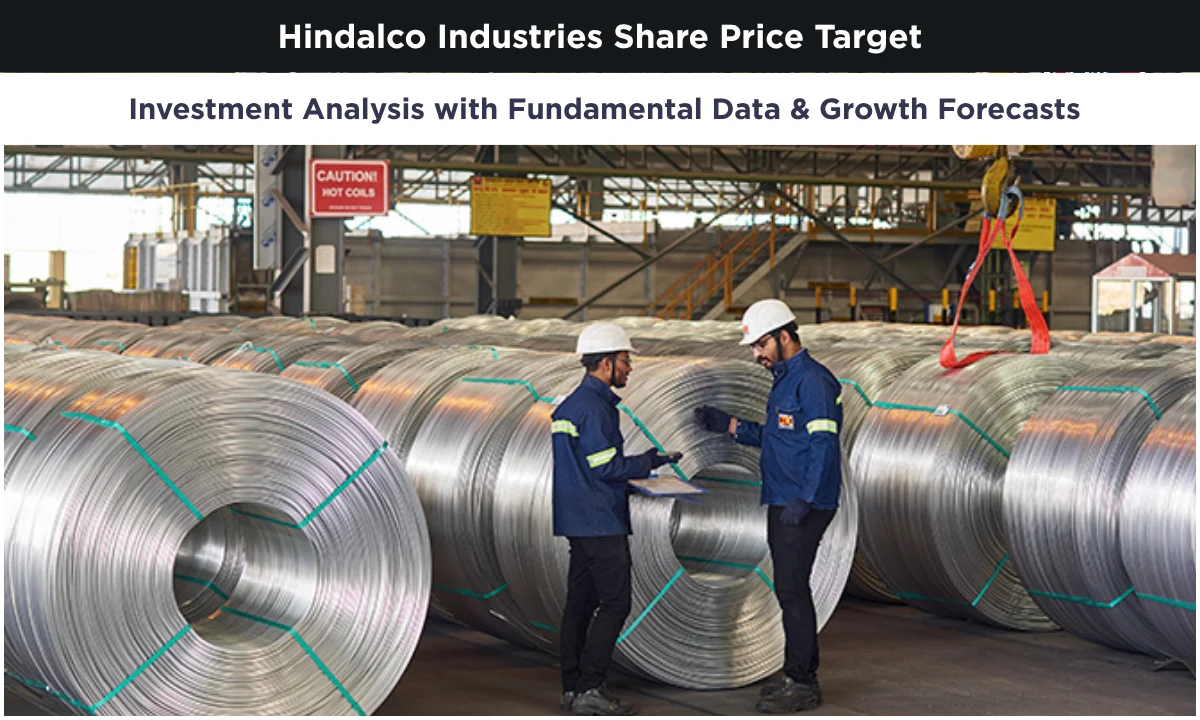
Hindalco Industries Share Price Target 2026, 2027, 2030 | Image Via © hindalco.com
Hindalco Industries stands as India’s largest non-ferrous metals company and a flagship entity of the Aditya Birla Group. The company operates as an integrated aluminium and copper producer with a presence across the entire value chain.
From mining bauxite and refining alumina to producing primary aluminium and manufacturing copper products, Hindalco maintains comprehensive control over its operations. The company also holds a significant global position through its subsidiary Novelis, which operates as the world’s largest producer of flat-rolled aluminium products.
The current market capitalization of Hindalco Industries hovers around ₹1,94,000 crore as of early April 2026. The stock trades on both the National Stock Exchange (NSE) and Bombay Stock Exchange (BSE) under the ticker symbol HINDALCO. With a price-to-earnings ratio of approximately 14.38 and earnings per share of ₹48.45 on a trailing twelve-month basis, the company presents itself as a reasonably valued investment option in the metals sector.
Understanding the share price trajectory of Hindalco requires a deep dive into multiple factors. These include the company’s financial performance, expansion plans, demand drivers from key sectors like electric vehicles and renewable energy, global aluminium price trends, and the operational status of its US subsidiary Novelis.
This article provides a comprehensive analysis of Hindalco share price targets for 2026, 2027, and 2030 based on fundamental research and analyst forecasts.
Table of Contents
Hindalco Industries Fundamental Analysis
Company Overview and Business Segments
Hindalco Industries operates through three primary business segments that contribute to its consolidated revenue and profitability. The first segment comprises the India Aluminium business, which includes upstream operations like bauxite mining, alumina refining, and primary aluminium smelting. This segment also encompasses downstream operations such as the production of flat-rolled products, extrusions, foils, and wire rods.
The second segment is Novelis, the US-based subsidiary that manufactures flat-rolled aluminium products primarily for the beverage can, automotive, and specialty markets. The third segment is the India Copper business, which involves copper smelting, refining, and the production of continuous cast copper rods and other copper products.
The company’s integrated business model provides significant advantages. Vertical integration from mining to finished products allows Hindalco to control costs and maintain quality standards across the production process. The diversification across aluminium and copper reduces dependence on a single commodity, while the presence in both domestic and international markets through Novelis provides geographic risk diversification.
Key Financial Metrics and Performance Indicators
The following table presents the key financial metrics for Hindalco Industries based on the latest available data:
| Metric | Value |
|---|---|
| Market Capitalization | ₹1,94,000 Crore |
| Price-to-Earnings Ratio | 14.38 |
| Earnings Per Share (TTM) | ₹48.45 |
| Dividend Yield | 0.50% |
| Return on Capital Employed | 11.46% |
| Return on Equity | 11.22% |
| Debt-to-Equity Ratio | 0.62 |
| Current Ratio | 1.23 |
| Book Value Per Share | ₹431.55 |
The debt-to-equity ratio of 0.62 indicates that Hindalco maintains a conservative leverage position. This metric has shown consistent improvement over the past five years, declining from 0.72 in FY2021 to the current level. The reduction in debt levels strengthens the company’s financial stability and reduces interest burden during cyclical downturns in the metals industry.
Historical Financial Performance FY2021 to FY2025
The financial performance of Hindalco over the past five fiscal years demonstrates strong growth momentum despite some volatility associated with commodity price cycles. The following table presents the revenue figures on a consolidated basis:
| Fiscal Year | Revenue (₹ Crore) | Year-over-Year Growth |
|---|---|---|
| FY2021 | 1,37,260 | -5.6% |
| FY2022 | 1,70,205 | +23.9% |
| FY2023 | 2,16,066 | +26.9% |
| FY2024 | 2,15,962 | -0.05% |
| FY2025 | 2,61,701 | +21.2% |
The revenue compound annual growth rate from FY2021 to FY2025 stands at 17.4%. This growth trajectory reflects the company’s successful capacity expansions, improved product mix with higher contribution from value-added products, and favorable demand conditions in both domestic and international markets. The slight decline in FY2024 represents the impact of commodity price corrections and global economic slowdown concerns.
Profit growth has outpaced revenue growth, indicating improving operational efficiency and margin expansion. The following table shows the profit after tax figures:
| Fiscal Year | Profit After Tax (₹ Crore) | Year-over-Year Growth |
|---|---|---|
| FY2021 | 5,120 | -33.2% |
| FY2022 | 8,182 | +59.7% |
| FY2023 | 7,122 | -12.9% |
| FY2024 | 11,152 | +56.6% |
| FY2025 | 16,078 | +44.2% |
The profit compound annual growth rate of 33.1% significantly exceeds the revenue CAGR, demonstrating the company’s ability to convert top-line growth into bottom-line profitability. This outperformance stems from cost optimization initiatives, higher realizations from value-added products, and operational efficiencies across manufacturing facilities.
Earnings Per Share and Return on Equity Trends
The earnings per share and return on equity metrics provide insights into the company’s profitability from a shareholder perspective. The following table presents these metrics over the five-year period:
| Fiscal Year | Earnings Per Share (₹) | Return on Equity (%) |
|---|---|---|
| FY2021 | 8.51 | 7.8 |
| FY2022 | 13.58 | 11.2 |
| FY2023 | 11.82 | 9.5 |
| FY2024 | 18.52 | 13.1 |
| FY2025 | 26.69 | 12.0 |
The earnings per share has shown a clear upward trend, rising from ₹8.51 in FY2021 to ₹26.69 in FY2025. This represents a more than threefold increase in earnings per share over the four-year period. The return on equity has stabilized in the range of 10% to 13%, which indicates efficient utilization of shareholder capital to generate returns.
Promoter Holding Pattern
Promoter holding in Hindalco Industries has remained remarkably stable over the past five years. The Aditya Birla Group maintains a consistent ownership stake, which signals long-term commitment to the business. The following table shows the promoter holding percentages:
| Fiscal Year | Promoter Holding (%) |
|---|---|
| FY2021 | 34.7 |
| FY2022 | 34.7 |
| FY2023 | 34.6 |
| FY2024 | 34.6 |
| FY2025 | 34.6 |
The stability in promoter holding at approximately 34.6% is viewed positively by market participants. It indicates that the promoters are neither diluting their stake aggressively nor accumulating shares in a manner that might signal distress. This steady ownership structure provides confidence to institutional and retail investors regarding the long-term strategic direction of the company.
Recent Quarterly Performance: Q3 FY2026 Results Analysis
Consolidated Financial Highlights
Hindalco Industries announced its financial results for the third quarter of fiscal year 2026 on February 12, 2026. The results present a mixed picture with strong operational performance in the India business offset by exceptional costs related to the Novelis Oswego plant disruption. The consolidated revenue from operations reached ₹66,521 crore, representing a 14% increase compared to ₹58,390 crore in Q3 FY2025. This revenue growth was driven by strong demand in the domestic market, higher copper realizations, and increased shipments of value-added aluminium products.
The consolidated EBITDA for Q3 FY2026 stood at ₹8,543 crore, marking a 5% increase from ₹8,108 crore in the same quarter of the previous fiscal year. The EBITDA margin came in at 12.02% compared to 13% in Q3 FY2025, reflecting the impact of input cost pressures and the Novelis operational challenges.
Profit after tax before exceptional items increased by 8% year-on-year to ₹4,051 crore. However, the reported net profit declined by 45% to ₹2,049 crore due to an exceptional charge of ₹2,610 crore related to the Oswego plant fires at Novelis.
Segment-wise Performance Breakdown
The India Aluminium business delivered record performance during Q3 FY2026. The upstream operations reported revenue of ₹10,620 crore, up 6% year-on-year. The EBITDA for the upstream segment surged 14% to ₹4,832 crore, driven by higher volumes and improved realizations. The EBITDA per tonne for upstream aluminium operations reached $1,572, representing a 6% increase with healthy margins of 45%.
The downstream aluminium segment achieved record EBITDA of ₹233 crore, up 55% year-on-year. This growth was supported by higher shipments and a favorable product mix focusing on value-added offerings. The downstream EBITDA per tonne improved by 35% to $241, indicating successful execution of the company’s strategy to move up the value chain.
The copper business reported revenue of ₹18,233 crore, up 33% year-on-year due to higher copper prices. The segment maintained EBITDA at ₹595 crore despite declining treatment and refining charges in the global market. Copper metal sales reached 122 kilotonnes, up 1% from the previous year.
Novelis reported revenue of $4.2 billion, up 3% year-on-year driven by higher metal prices. However, adjusted EBITDA declined 5% to $348 million due to lower volumes, tariff impacts, and the disruption caused by the Oswego fires. Shipments dropped to 809 kilotonnes from 904 kilotonnes in Q3 FY2025.
Impact of Novelis Oswego Plant Fires
The Novelis aluminium plant in Oswego, New York experienced two significant fires in the hot mill area on September 16, 2025, and November 21, 2025. These incidents severely impacted production capacity during the quarter and resulted in substantial repair costs and inventory write-downs.
Novelis has estimated that 70% to 80% of the free cash flow and adjusted EBITDA impact is recoverable through insurance claims. The total free cash flow impact is estimated between $1.3 billion and $1.6 billion. The company expects to restart the Oswego hot mill in late Q2 calendar 2026, which corresponds to Q1 FY2027.
Despite these challenges, Novelis registered a 6% improvement in EBITDA per tonne, reflecting its focus on cost optimization and operational excellence. The company is working closely with customers and leveraging its global presence and external suppliers to mitigate the impact on customer deliveries.
Management Commentary and Future Guidance
Satish Pai, Managing Director of Hindalco Industries, commented on the quarterly results. He stated that Hindalco sustained its growth momentum amid global volatility, led by all-time high performance from its India business. This strength helped offset the impact of tariffs and the Oswego disruption, supported by disciplined cost management and operational efficiencies across segments.
The management highlighted strong progress across the downstream portfolio with the commissioning and ramping up of key projects including Aditya Flat Rolled Products, battery foil manufacturing, AC fin coating, and copper tubes. These developments position the company well for emerging growth opportunities in electric vehicles, renewable energy, and advanced manufacturing.
Hindalco has entered the next phase of growth with a clear roadmap to expand upstream capacities. The aluminium capacity is planned to scale up from 1.3 million tonnes to 1.7 million tonnes, while copper smelting capacity is targeted to increase from 400 kilotonnes to 700 kilotonnes. The Bay Minette project at Novelis, with a capacity of 600 kilotonnes, remains on track for commissioning in the second half of FY2027 and will serve as a key growth driver for the US subsidiary.
Major Expansion Plans & Strategic Initiatives
Odisha Aluminium Smelter Expansion
In January 2026, Hindalco announced a major capital investment of ₹21,000 crore (approximately $2.3 billion) to expand its aluminium smelter operations in Odisha. This expansion targets the Aditya Aluminium complex in Sambalpur and will increase capacity by 360,000 tonnes per annum. The project aims to meet the growing demand for high-quality aluminium products in India and reduce the country’s dependence on imports.
Simultaneously, the company commissioned a ₹4,500 crore (approximately $500 million) facility for manufacturing flat-rolled products and battery-grade aluminium foil. This facility represents the first of its kind in India and will cater to the growing demands of the electric vehicle, energy storage, and advanced manufacturing industries. The battery-grade foil production facility has a capacity of 170,000 tonnes per annum and can support the production of up to 100 gigawatt-hours of lithium-ion batteries.
These investments are part of Hindalco’s overall capital expenditure outlay of ₹37,000 crore (approximately $4.11 billion) for its integrated upstream and downstream aluminium business in Odisha. The projects are expected to generate more than 15,000 new jobs in the region, contributing to local economic development while strengthening the company’s market position.
Electric Vehicle Component Manufacturing
Hindalco has made significant strides in the electric vehicle component sector. In April 2025, the company announced the successful delivery of 10,000 aluminium battery enclosures to Mahindra for its electric SUVs, the BE 6 and XEV 9e models. This milestone was achieved from the company’s new state-of-the-art manufacturing facility in Chakan, Pune.
The Chakan facility was built with a capital investment of ₹500 crore and spans 5 acres within an industrial park. It currently has the capacity to produce 80,000 battery enclosures annually, with plans to scale up to 160,000 units. The battery enclosure co-developed with Mahindra offers up to 40% weight reduction compared to traditional steel designs, enabling an 8% to 10% improvement in vehicle driving range while enhancing crash safety and thermal management for battery cooling.
The facility employs nearly 100% women machine operators, reflecting Hindalco’s commitment to gender diversity and inclusive workforce practices. The company plans to offer similar aluminium solutions to other Indian and global original equipment manufacturers, expanding its offerings to include structural and crash-relevant parts for both electric vehicles and internal combustion engine vehicles.
Capacity Expansion Roadmap
The company has outlined a clear capacity expansion roadmap for the coming years. In the aluminium segment, capacity is planned to increase from the current 1.3 million tonnes to 1.7 million tonnes by FY2029. This expansion will be driven by the Aditya Aluminium smelter expansion project in Odisha. In the copper segment, smelting capacity is targeted to grow from 400 kilotonnes to 700 kilotonnes, supported by the copper tubes project and copper recycling project that are progressing on schedule.
At Novelis, the 600 kilotonne Bay Minette project in Alabama, USA remains on track for commissioning in the second half of FY2027. This greenfield facility will add significant capacity to serve the North American beverage can and automotive markets. The project represents a key growth driver for Novelis once operational.
Demand Drivers & Market Opportunities
Electric Vehicle Adoption and Aluminium Demand
The rapid adoption of electric vehicles in India presents a significant growth opportunity for Hindalco. Aluminium plays a critical role in electric vehicle manufacturing due to its lightweight properties, which help improve battery efficiency and driving range. The Indian government’s FAME II scheme has supported the adoption of 16,71,606 electric vehicles by March 31, 2025, alongside support for electric buses and public charging infrastructure.
Industry analysts project that India’s EV penetration could reach 30% by 2030. This transition will drive substantial demand for aluminium in battery housings, structural components, and lightweight body parts. Hindalco’s early investments in battery-grade foil and EV component manufacturing position the company to capture this growing demand.
The aluminium content in electric vehicles is significantly higher than in conventional internal combustion engine vehicles. While a typical petrol or diesel vehicle contains approximately 150 kilograms of aluminium, electric vehicles can contain 200 to 250 kilograms or more. This increased aluminium intensity, combined with rising EV sales volumes, creates a structural demand tailwind for producers like Hindalco.
Renewable Energy Infrastructure Growth
India’s ambitious renewable energy targets are creating sustained demand for both aluminium and copper. The government aims to achieve 500 gigawatts of renewable energy capacity by 2030, requiring massive investments in solar and wind power infrastructure. Aluminium is essential for solar panel frames, mounting structures, and inverters, while copper is critical for wiring, transformers, and grid connectivity.
The solar sector alone is expected to consume over 3 million tonnes of copper annually by 2030. Government initiatives like the Green Energy Corridor project and various state-level renewable policies are accelerating this demand. Hindalco’s product portfolio aligns well with these requirements, offering high-conductivity copper products and corrosion-resistant aluminium alloys for outdoor applications.
Infrastructure and Construction Demand
Government-backed infrastructure investments continue to drive aluminium consumption in India. The National Infrastructure Pipeline involves an estimated investment of $1.4 trillion through 2025, promoting aluminium use in sectors like railways, power transmission, and smart cities. The PM GatiShakti National Master Plan has evaluated 293 infrastructure projects worth ₹13.59 lakh crore, while the Smart Cities Mission has completed 7,188 projects worth ₹1,44,237 crore.
The construction sector accounts for nearly 40% of India’s aluminium consumption. Aluminium’s lightweight properties, corrosion resistance, durability, and recyclability make it a preferred choice for modern buildings, transport-linked infrastructure, facades, window frames, cladding, and roofing systems. As rapid urbanization and housing development continue, aluminium demand from this sector is expected to remain robust.
Automotive Sector Growth
The Indian automotive industry is experiencing steady growth, with passenger vehicle sales reaching a record 4.3 million units in FY2024-25 according to the Society of Indian Automobile Manufacturers. Major manufacturers like Maruti Suzuki sold 22,34,266 vehicles in FY2024-25 and exported 3,32,585 units, reflecting the scale at which India’s vehicle ecosystem is creating demand for high-performance materials.
The shift towards electric mobility further underscores the importance of aluminium in automotive applications. Aluminium alloys are used for lightweighting vehicles, improving fuel efficiency, and meeting stringent emission norms under BS-VI regulations. Hindalco’s partnerships with automotive original equipment manufacturers and its focus on developing specialized alloys position it to benefit from this trend.
Global Aluminium Market Dynamics
Supply-Demand Balance and Price Outlook
The global aluminium market is entering 2026 with strong fundamentals. Structural demand from electric vehicles, renewable energy, and electrification coincides with persistent supply constraints. Global inventories are at multi-year lows and production growth remains limited, suggesting the market will remain in deficit and support sustained price strength.
Recent supply disruptions underline the market’s vulnerability. Century Aluminium’s smelter in Iceland faced a partial shutdown in late October 2025, while Mozambique’s Mozal Aluminium smelter is reportedly set to move to care and maintenance from March 2026 after failing to secure a power supply agreement. India’s National Aluminium Company has indicated that the aluminium market will remain in deficit for at least the next two years.
Goldman Sachs has projected aluminium prices averaging around $2,300 per tonne in the fourth quarter of 2026, rising toward approximately $2,800 by 2027 as market deficits re-emerge. The aluminium cost curve is clustered around $2,400 per tonne for nearly 90% of global producers. Historically, in a deficit environment, prices tend to trade well above this level, reinforcing the case for sustained strength through 2026 and beyond.
Geopolitical Supply Shocks
In March 2026, Iranian missile and drone attacks damaged key Middle East aluminium facilities including Emirates Global Aluminium’s Al Taweelah smelter and Aluminium Bahrain. These attacks disrupted approximately 4% of global output, pushing aluminium prices higher and benefiting Indian producers like Hindalco, NALCO, and Vedanta.
The supply disruptions have created a favorable pricing environment for domestic producers. With global supply chains facing stress, Indian manufacturers have the opportunity to gain market share both domestically and in export markets. Hindalco’s integrated operations and scale position it well to capitalize on these dynamics.
Sustainability and Green Aluminium Trends
A clear trend in the global aluminium market is the shift toward sustainable and green production. Leading producers are investing in renewable energy, recycling, and lower-carbon manufacturing to meet stricter environmental expectations and improve long-term competitiveness. The European Union’s Carbon Border Adjustment Mechanism, scheduled for full implementation from 2026, will gradually impose a carbon price on imports of aluminium and other energy-intensive goods.
Hindalco has been recognized as the World’s Most Sustainable Aluminium Company for the sixth consecutive year in the S&P Global Corporate Sustainability Assessment rankings. The company has implemented a 100 megawatt hybrid renewable energy project at its Aditya Aluminium smelter in Odisha, integrating solar, wind, and storage to deliver stable, round-the-clock, carbon-free power for smelting. This focus on sustainability aligns with global trends and positions the company favorably for future regulatory requirements.
Hindalco Share Price Target 2026
Analyst Consensus and Price Target Range
Based on analyst forecasts and fundamental analysis, the share price target for Hindalco in 2026 reflects a range that accounts for both growth opportunities and near-term challenges. According to data from TradingView, analysts have set an average price target of ₹953.18 for Hindalco, with a maximum estimate of ₹1,210 and a minimum estimate of ₹631. Wall Street analysts forecast an average 1-year price target of ₹955.64, with a low forecast of ₹565.6 and a high forecast of ₹1,270.5.
The consensus recommendation from 27 brokerage firms indicates an average rating of 2.2, which corresponds to an “Outperform” status on a scale where 1 signifies strong buy and 5 denotes sell.
Monthly Price Target Breakdown for 2026
The following table presents a month-by-month breakdown of the share price target for Hindalco in 2026. These targets are based on technical analysis, fundamental projections, and expected business developments throughout the year:
| Month | Minimum Price Target (₹) | Maximum Price Target (₹) |
|---|---|---|
| January | 882 | 1,029 |
| February | 841 | 980 |
| March | 800 | 1,042 |
| April | 764 | 1,185 |
| May | 800 | 1,225 |
| June | 910 | 1,274 |
| July | 974 | 1,300 |
| August | 1,055 | 1,321 |
| September | 1,124 | 1,345 |
| October | 1,162 | 1,368 |
| November | 1,200 | 1,389 |
| December | 1,247 | 1,466 |
The price trajectory shows a gradual upward trend through 2026, with the maximum target reaching ₹1,466 by December. This progression reflects expectations of improving operational performance, the restart of the Novelis Oswego plant, and continued strong demand from the India business.
Key Drivers for 2026 Price Performance
Several factors will influence Hindalco’s share price performance in 2026. The restart of the Novelis Oswego hot mill in Q1 FY2027 (calendar Q2 2026) represents a critical catalyst. Successful resumption of operations at this facility will remove a significant overhang on earnings and restore Novelis’s production capacity.
The ramp-up of the Odisha flat-rolled products and battery-grade foil facility will contribute to revenue growth and margin expansion. As this facility reaches full utilization, it will reduce India’s dependence on imported flat-rolled aluminium and capture premium pricing for battery-grade products.
Global aluminium prices are expected to remain firm due to supply deficits and inventory constraints. Hindalco’s India operations will benefit from these favorable pricing conditions, supporting EBITDA growth and profitability.
The commissioning of the Bay Minette project at Novelis in the second half of FY2027 will provide visibility into future growth. While full contribution will come in FY2028, progress on this project will influence investor sentiment in 2026.
Hindalco Share Price Target 2027
Analyst Forecasts and Projections
For 2027, analyst forecasts indicate continued growth in Hindalco’s share price, supported by the full operationalization of expansion projects and recovery at Novelis. According to WalletInvestor’s technical analysis, the stock price is projected to reach ₹1,115 by December 2027, representing a steady appreciation from 2026 levels.
The following table presents the monthly price target breakdown for 2027:
| Month | Minimum Price Target (₹) | Maximum Price Target (₹) |
|---|---|---|
| January | 996 | 1,004 |
| February | 1,004 | 1,007 |
| March | 1,009 | 1,014 |
| April | 1,010 | 1,018 |
| May | 1,017 | 1,026 |
| June | 1,026 | 1,030 |
| July | 1,031 | 1,044 |
| August | 1,045 | 1,060 |
| September | 1,060 | 1,074 |
| October | 1,074 | 1,085 |
| November | 1,085 | 1,095 |
| December | 1,096 | 1,115 |
The price targets for 2027 reflect a more gradual appreciation compared to 2026, as the major catalysts from the Odisha expansion and Novelis recovery will have been largely priced in by the market. The focus will shift to execution of growth plans and market share gains in the EV and renewable energy sectors.
Growth Catalysts for 2027
The full-year contribution from the expanded Odisha operations will drive revenue growth in 2027. With the additional 360,000 tonnes of aluminium smelting capacity and 170,000 tonnes of battery-grade foil capacity fully operational, Hindalco will benefit from higher volumes and improved product mix.
The Bay Minette project at Novelis is scheduled for commissioning in the second half of FY2027. This 600,000 tonne facility will add significant capacity to serve the North American beverage can and automotive markets. The ramp-up of this project will contribute to Novelis’s shipment volumes and revenue growth in the second half of 2027.
Continued growth in electric vehicle adoption in India will drive demand for battery enclosures, battery foil, and lightweight structural components. Hindalco’s partnerships with automotive OEMs and its dedicated EV component manufacturing facility position it to capture this demand.
The renewable energy sector will remain a key demand driver, with ongoing solar and wind installations requiring aluminium for frames, mounting structures, and electrical components. The government’s target of 500 gigawatts of renewable capacity by 2030 ensures sustained demand growth through 2027 and beyond.
Hindalco Share Price Target 2030
Long-term Fundamental Outlook
The share price target for Hindalco in 2030 is based on the company’s long-term growth trajectory, structural demand drivers, and successful execution of its expansion plans. By 2030, Hindalco aims to become a leader in sustainable metals production, with significant capacity additions across aluminium and copper segments.
According to WalletInvestor’s long-term forecast, Hindalco’s stock price is projected to reach ₹1,473 by December 2030. This projection is based on technical analysis and assumes continued growth in the underlying business. The following table presents the monthly price target breakdown for 2030:
| Month | Minimum Price Target (₹) | Maximum Price Target (₹) |
|---|---|---|
| January | 1,354 | 1,362 |
| February | 1,362 | 1,366 |
| March | 1,366 | 1,371 |
| April | 1,368 | 1,376 |
| May | 1,375 | 1,383 |
| June | 1,383 | 1,386 |
| July | 1,388 | 1,402 |
| August | 1,402 | 1,416 |
| September | 1,418 | 1,431 |
| October | 1,431 | 1,443 |
| November | 1,442 | 1,452 |
| December | 1,454 | 1,473 |
Strategic Vision for 2030
By 2030, Hindalco expects to have fully integrated its expanded capacities and established itself as a key supplier to the electric vehicle, renewable energy, and infrastructure sectors. The company’s aluminium capacity will have increased from 1.3 million tonnes to 1.7 million tonnes, while copper smelting capacity will have expanded from 400 kilotonnes to 700 kilotonnes.
The focus on value-added products will have transformed the revenue mix, with downstream and specialized products contributing a larger share of total revenue. This shift will reduce dependence on raw metal prices and provide more stable earnings.
Sustainability initiatives will have advanced significantly, with renewable energy powering a larger share of smelting operations and recycling capacity expanded to meet circular economy goals. Hindalco’s leadership in sustainable aluminium production will provide competitive advantages in global markets where carbon footprint is increasingly important.
Market Size and Growth Projections
The India aluminium market was valued at approximately USD 15.49 billion in 2024 and is expected to reach USD 25.03 billion by 2030, representing a compound annual growth rate of 7.81%. In volume terms, the market is projected to grow from 6,626 thousand metric tonnes in 2024 to 10,201 thousand metric tonnes by 2030.
This market expansion is driven by rapid industrialization, urbanization, and demand from construction, automotive, electrical, and packaging sectors. Government initiatives promoting infrastructure development and manufacturing under the Make in India program further support market growth. Hindalco, as the largest domestic producer, is well-positioned to capture a significant share of this market expansion.
Investment Analysis: Bull Case and Bear Case
Bull Case for Hindalco Investment
The bull case for Hindalco rests on several strong fundamentals that support long-term value creation. The company has demonstrated a revenue compound annual growth rate of 17.4% over the past five years, with profit growth of 33.1% CAGR. This outperformance indicates strong operational execution and the ability to convert market opportunities into profitability.
The expansion plans totaling over ₹37,000 crore in Odisha provide a clear roadmap for capacity growth. These investments will reduce India’s dependence on aluminium imports and position Hindalco as a key supplier to high-growth sectors like electric vehicles and renewable energy.
Structural demand drivers remain intact. The electric vehicle sector is projected to grow at 36% CAGR until 2030, while renewable energy installations will require significant aluminium and copper inputs. Government infrastructure spending continues at record levels, supporting demand from the construction and power sectors.
The company’s focus on value-added products is improving margins. Downstream EBITDA per tonne has increased significantly, and the new battery-grade foil facility will capture premium pricing. This shift up the value chain reduces dependence on commodity price cycles.
Hindalco’s sustainability leadership provides competitive advantages. Recognition as the world’s most sustainable aluminium company for six consecutive years positions it well for evolving regulatory requirements and customer preferences for low-carbon materials.
Bear Case and Risk Factors
Investors must also consider the bear case and associated risks. The company remains exposed to commodity price volatility. Aluminium and copper prices are subject to global economic conditions, and any downturn could impact margins and profitability.
The Novelis operations face ongoing challenges. The Oswego plant fires resulted in significant exceptional costs, and the restart timeline extends into Q2 2026. Any further delays or operational issues could impact earnings recovery.
Global economic uncertainty and trade disputes present risks. Tariffs on aluminium imports into key markets like the United States can affect Novelis’s competitiveness and margins. Trade policy changes under new administrations could alter the competitive landscape.
Competition from domestic and international players is intensifying. Companies like Vedanta, NALCO, and global producers are expanding capacity and targeting the same growth segments. Maintaining market share will require continued investment and operational excellence.
The capital-intensive nature of the business demands continuous investment. Expanding and modernizing operations requires significant capital expenditure, which could strain cash flows or necessitate additional debt.
Regulatory and environmental compliance requirements are becoming stricter. While Hindalco leads in sustainability, meeting evolving standards will require ongoing investment and could impact costs.
Peer Comparison & Industry Position
Comparison with Indian Metals Peers
The following table presents a comparison of Hindalco with its key peers in the Indian metals sector:
| Company | Market Capitalization (₹ Crore) | P/E Ratio | Key Strengths |
|---|---|---|---|
| Hindalco Industries | 1,94,000 | 14.38 | Integrated operations, global presence through Novelis, strong downstream focus |
| Tata Steel | 1,48,782 | 8.41 | Diversified steel portfolio, strong domestic market position |
| JSW Steel | 1,98,876 | 21.74 | Rapid capacity expansion, cost-efficient operations |
| Vedanta | 1,07,932 | 10.81 | Diversified mining and metals portfolio, integrated aluminium operations |
| NALCO | 23,768 | 12.52 | Low-cost alumina and aluminium production, strong government backing |
Hindalco’s valuation at a P/E of 14.38 positions it between the lower valuations of commodity-focused peers like Tata Steel and Vedanta and the higher valuation of growth-focused JSW Steel. The company’s integrated operations and global presence through Novelis provide differentiation from domestic peers.
Competitive Advantages
Hindalco maintains several competitive advantages that support its market position. The integrated value chain from bauxite mining to finished products provides cost control and quality assurance. The global presence through Novelis offers geographic diversification and access to premium markets for flat-rolled products.
The company’s focus on research and development enables the creation of specialized alloys and products for emerging applications. Partnerships with automotive and electronics manufacturers provide early access to growth opportunities.
Sustainability leadership is increasingly important as customers and regulators focus on carbon footprint. Hindalco’s renewable energy initiatives and recycling capabilities position it favorably for this transition.
Dividend Policy & Shareholder Returns
Dividend History and Yield
Hindalco has maintained a consistent dividend policy, though the yield remains relatively low compared to some other metals companies. The following table shows the dividend yield trends over the past five years:
| Fiscal Year | Dividend Yield (%) |
|---|---|
| FY2021 | 0.8 |
| FY2022 | 0.6 |
| FY2023 | 0.5 |
| FY2024 | 0.4 |
| FY2025 | 0.3 |
The declining yield percentage reflects the rising share price rather than reduced dividend payments. The company reinvests a significant portion of profits into growth initiatives, which is appropriate given the expansion opportunities in the market. The payout ratio stands at approximately 7% of profits, leaving substantial retained earnings for capital expenditure.
Total Shareholder Return Potential
For investors, total returns will likely come primarily from capital appreciation rather than dividend income. The share price targets outlined for 2026, 2027, and 2030 suggest potential for significant capital gains over the medium to long term. The low dividend yield makes Hindalco more suitable for growth-oriented investors rather than those seeking income.
Risk Factors & Mitigation Strategies
Operational Risks
Operational risks include production disruptions at manufacturing facilities, as evidenced by the Novelis Oswego plant fires. Hindalco mitigates these risks through insurance coverage, with Novelis estimating that 70% to 80% of the financial impact is recoverable through insurance. The company also maintains multiple production facilities to provide redundancy and supply chain flexibility.
Commodity Price Risks
Aluminium and copper prices are subject to global market forces beyond the company’s control. Hindalco manages these risks through hedging strategies, long-term contracts with customers, and focus on value-added products where pricing is less directly tied to commodity benchmarks. The downstream operations provide natural hedging through conversion margins.
Currency and Interest Rate Risks
As a company with significant international operations through Novelis, Hindalco faces currency fluctuation risks. The company manages these through natural hedging (matching revenues and costs in the same currency) and financial hedging where appropriate. Interest rate risks are managed through a mix of fixed and floating rate debt, with the current low debt-to-equity ratio providing flexibility.
Regulatory and Environmental Risks
The metals industry faces increasing regulatory scrutiny regarding environmental impact and carbon emissions. Hindalco’s leadership in sustainability and investments in renewable energy position it well to meet evolving standards. The company has eliminated single-use plastic across 21 sites, repurposed waste streams, and upcycled 85% of all waste generated.
Conclusion & Investment Recommendation
Hindalco Industries presents a compelling investment case for those seeking exposure to India’s industrial growth and the global transition to electric vehicles and renewable energy. The company’s strong fundamentals, with 17.4% revenue CAGR and 33.1% profit CAGR over the past five years, demonstrate consistent execution and operational excellence.
The share price targets of ₹1,466 for 2026, ₹1,115 for 2027, and ₹1,473 for 2030 represent potential upside from current levels, though investors should note that these targets are subject to market conditions, commodity prices, and execution of expansion plans. The near-term recovery of Novelis operations and the ramp-up of Odisha facilities are critical catalysts to watch.
The bull case is supported by structural demand growth from electric vehicles, renewable energy, and infrastructure, combined with Hindalco’s integrated operations and sustainability leadership. The bear case acknowledges commodity price volatility, competitive pressures, and the capital-intensive nature of the business.
Investors with a medium to long-term horizon and tolerance for cyclical volatility may find Hindalco an attractive addition to their portfolios. The company’s strategic positioning in high-growth segments, strong balance sheet with debt-to-equity of 0.62, and stable promoter holding at 34.6% provide confidence in its ability to navigate market cycles and deliver shareholder value.
As with any investment, thorough research and consideration of individual risk tolerance are essential. The metals sector is cyclical, and share prices can be volatile. Diversification across sectors and regular portfolio review remain important risk management practices.
Related Posts :
Share This Post